

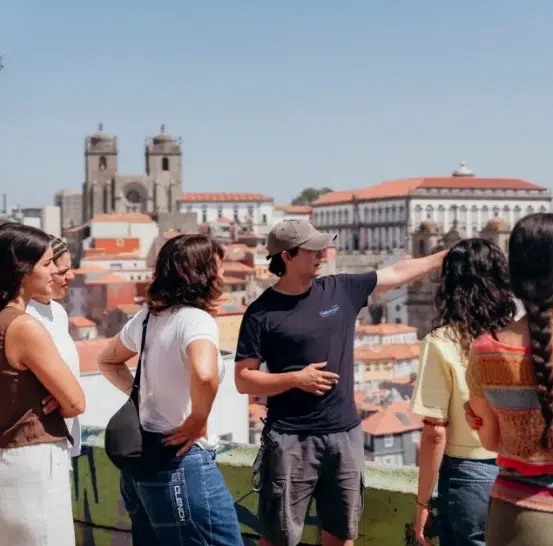
Why a Porto Walking Tour Is Essential (Not Optional)
Exploring Porto on foot is not simply a pleasant option — it is the most effective way to understand the city’s identity. Built on steep hills overlooking the Douro River, Porto developed organically over centuries. Its medieval fabric, mercantile heritage and layered urban structure can only truly be understood when experienced step by step.
Before booking a Best of Porto walking tour, it is worth understanding the different formats available, what they include, and how they shape your perception of the city. This guide explains everything you need to know to choose wisely.
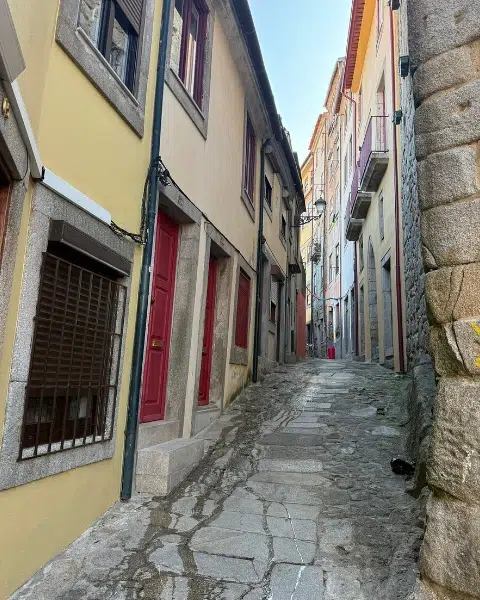
The historic centre of Porto is a dense and vertical urban landscape. Streets were not designed according to a grid. They evolved from medieval pathways, commercial expansion and defensive needs.
Without context, landmarks are simply monuments. With explanation, they become chapters of a coherent narrative.
Urban historians frequently describe Porto as a city best understood sequentially rather than spatially.
A structured walking tour allows you to:
- Understand Porto’s medieval foundation around the cathedral
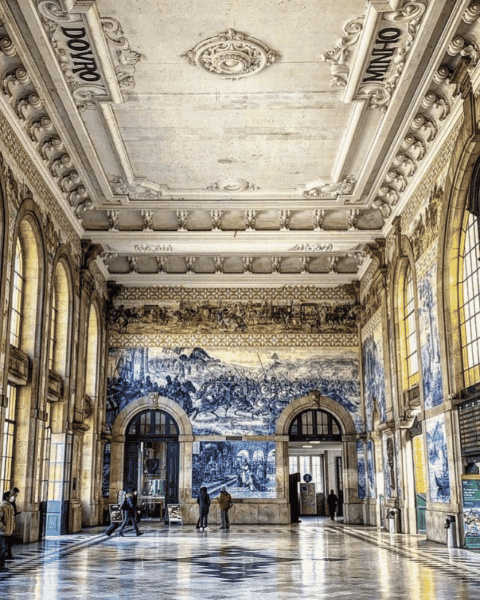
- Interpret the historical panels inside São Bento station
- Decode the symbolism of the Clerigos Tower
- Grasp the commercial role of Ribeira and the Douro trade routes
- Recognise the city’s social stratification across elevations
In 1996, Porto’s Historic Centre was classified as a UNESCO World Heritage Site, acknowledging its exceptional urban fabric and historical continuity. A quality walking tour explains why.
A Brief Historical Framework (Essential Context)
To truly appreciate a Porto walking tours with a local guide, you need the timeline:
Roman origins under “Portus Cale”
The origins of Porto date back to Roman occupation, when the settlement known as Portus Cale emerged along the Douro estuary. This name would later give rise to “Portugal.”
Although visible Roman remains are limited within the current historic centre, archaeological evidence confirms the presence of a trading harbour and road connections linking the settlement to the broader Roman network in the Iberian Peninsula.
Understanding this origin is fundamental: Porto was born as a trading port before becoming a medieval stronghold.
Historians generally agree that Porto’s identity as a mercantile centre predates its consolidation as a fortified medieval city, reinforcing the idea that commerce shaped its urban development from the outset.
Medieval consolidation around the Cathedral (12th century)
The consolidation of Porto as a structured urban nucleus occurred during the 12th century, following the Christian reconquest of the territory.
The Sé do Porto was constructed primarily in Romanesque style, reflecting both religious authority and defensive necessity. Its fortress-like appearance is not symbolic — it was strategic.
During this period:
- The bishop held significant political authority.
- Porto became a key ecclesiastical and administrative centre.
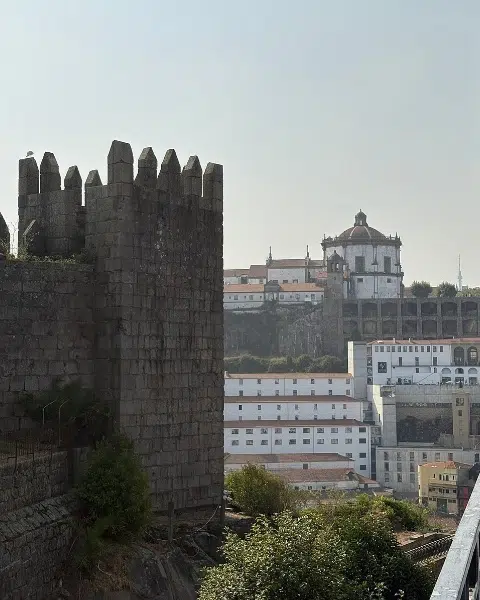
- Defensive walls enclosed the upper settlement.
The cathedral precinct marks the true medieval heart of the city, and a serious walking tour begins here.
Mercantile Expansion and Atlantic Trade (15th–18th Centuries)
From the 15th century onwards, Porto’s identity shifted toward maritime commerce.
The city supplied ships during the Portuguese Age of Discoveries and developed a strong mercantile class. However, it was the formalisation of the Port wine trade in the 17th and 18th centuries that transformed Porto economically.
The Methuen Treaty (1703) between Portugal and England strengthened commercial ties and boosted wine exports. Warehouses multiplied across the river in Vila Nova de Gaia, while Porto’s urban centre reflected growing bourgeois wealth.
A knowledgeable guide explains:
- Why wine lodges are located in Gaia rather than Porto itself
- How British influence shaped local trade structures
- The economic implications of the Douro demarcated region (1756)
Without this framework, Ribeira is simply picturesque. With it, it becomes evidence of Atlantic capitalism.
The Baroque and Enlightenment Influence
The 18th century introduced Baroque dynamism into Porto’s skyline.
The Torre dos Clérigos, designed by Nicolau Nasoni, is not merely a viewpoint. It symbolises clerical influence and aesthetic ambition during a period of economic confidence.
Meanwhile, urban reforms during the Enlightenment gradually reorganised public spaces, foreshadowing later liberal transformations.
Liberal Resistance and the Siege of Porto (1832–1833)
Porto’s political identity was solidified during the Liberal Wars. The city endured a prolonged siege between 1832 and 1833, supporting constitutionalist forces against absolutism.
This resistance cemented Porto’s reputation as a city of independence and civic resilience.
Many Portuguese historians consider the Siege of Porto a defining moment in the consolidation of constitutional liberalism in the country.
On a walking tour, references to these events are not decorative historical anecdotes — they explain why Porto is culturally distinct from Lisbon.
UNESCO Classification and Urban Continuity
In 1996, Porto’s Historic Centre was recognised as a UNESCO World Heritage Site.
The UNESCO evaluation highlights the exceptional continuity of urban fabric, the preservation of medieval street patterns and the city’s ability to adapt to steep topography without losing structural coherence.
Unlike reconstructed historic centres elsewhere in Europe, Porto’s fabric reflects uninterrupted occupation and organic development.
A high-quality Porto walking tour contextualises this distinction.
The 4 Main Types of Porto Walking Tours
1. Free Walking Tour
Model: Tip-based
Average final contribution: €20–€30
Group size: 20–35 people
A good introductory overview of the main landmarks. Ideal for travellers looking for a general orientation.
Advantage: Low initial cost
Limitation: Less depth and reduced interaction due to group size
2. Structured Historical Walking Tour
Average price: €29–€35
Group size: 2–15 participants
Duration: 2.5 to 3.5 hours
This format follows a chronological narrative:
- Medieval origins
- Commercial expansion
- Liberal revolution
- Urban modernisation
Small-group walking tours offer greater engagement, clearer explanations and better pacing. Companies such as Bluedragon operate structured routes like “Best of Porto”, focusing on detailed historical interpretation with local guides.
For travellers seeking understanding rather than surface-level sightseeing, this is often the best option.
For those seeking a more personalised experience, a private Porto walking tours allows full flexibility in pacing, thematic focus and monument access, making it particularly suitable for families, couples or travellers with specific historical interests.
3. Food & Wine Walking Tour
Average price: €69–€99
Combines cultural heritage with gastronomic interpretation.
Typically includes:
- Port wine tastings
- Explanation of Douro trade routes
- Distinction between Ruby and Tawny styles
- Traditional Portuguese petiscos – Porto food tour
This format contextualises Porto economically and socially through food and wine traditions.
4. Alternative / Contemporary Walking Tour
Focused on street art, rehabilitation districts and modern narratives, this type suits returning visitors who already know the historic core.
The City’s Vertical Structure: Understanding Porto’s Three Levels
One of Porto’s defining characteristics is its vertical organisation.
Upper Level – Aliados & Clerigos
Administrative and bourgeois expansion zones.
Mid Level – São Bento & Batalha
Transit corridors and transitional urban fabric.
Lower Level – Ribeira & Douro Riverfront
Medieval nucleus linked to commerce and river trade.
According to urban morphology studies, Porto’s layered structure reflects defensive priorities, commercial accessibility and social hierarchy — all directly influenced by the granite terrain and proximity to the river. A well-designed walking tour explains how topography influenced defence, trade and social hierarchy.
Porto Walking Tour Itinerary by Bluedragon
This 3-hour Porto walking tour follows a carefully structured route through the historic centre, connecting medieval origins, commercial expansion and urban transformation in clear chronological order. More than a simple walk between landmarks, this carefully designed Porto itinerary provides historical continuity and geographic coherence, helping visitors understand how the city evolved across centuries.
The experience begins at the Bluedragon meeting point in the Baixa district, where participants receive a brief introduction to Porto’s historical framework before entering the UNESCO-listed historic core. From here, the walk moves through the commercial heart of the city toward Bolhão Market, offering insight into Porto’s traditional market culture and everyday life.
A short walk leads to Café Majestic, where Belle Époque elegance reflects the prosperity of early 20th-century bourgeois Porto. The route then continues toward the elevated medieval nucleus of the city.
The first major historical stop is the Porto Cathedral (Sé do Porto), one of the oldest monuments in the city. From this commanding plateau, the defensive logic of medieval Porto becomes immediately visible. Romanesque architecture, episcopal authority and the strategic positioning of the upper city are explained in context.
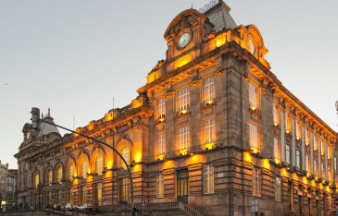
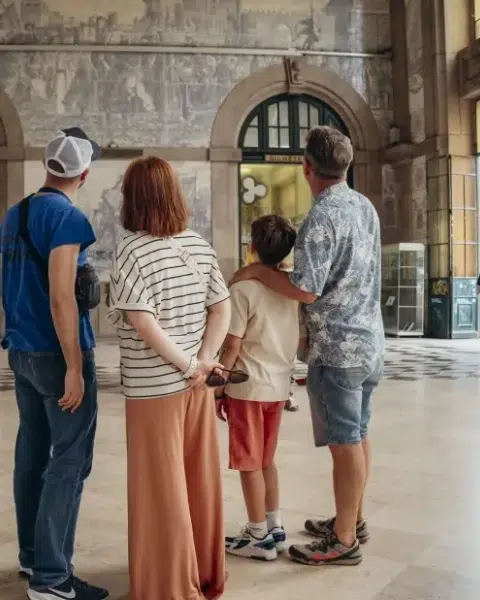
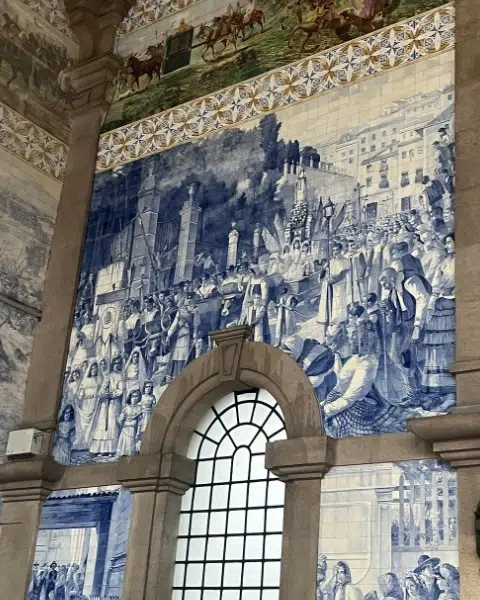
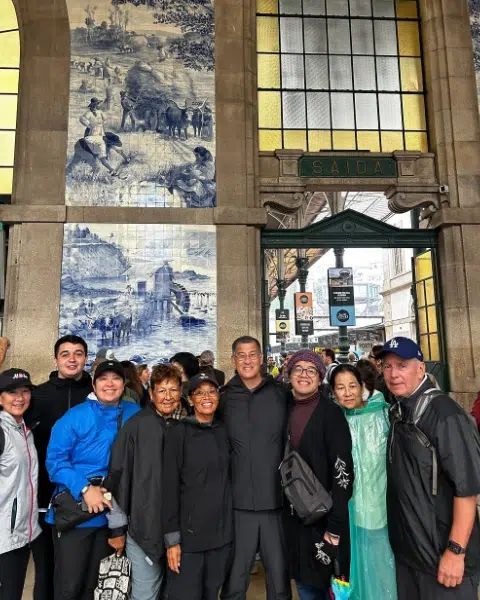
Descending from the cathedral, the tour reaches São Bento Railway Station, where over 20,000 hand-painted azulejos narrate key moments of Portuguese history. The station acts as a visual bridge between medieval Porto and the modern nation.
From São Bento, the route unfolds along Aliados Avenue, Porto’s grand civic boulevard. Here, Art Nouveau and Art Deco façades illustrate 19th- and early 20th-century urban reform and political modernisation. The walk continues through the lively streets of Cândido dos Reis and Galerias de Paris, reflecting the city’s contemporary energy layered over historic foundations.
Approaching the upper central zone, the tour passes by the renowned Lello Bookstore, highlighted for its architectural and cultural significance, though without a scheduled interior stop to maintain pacing.
Nearby, Gomes Teixeira Square (Lions Square) introduces the academic presence of the University of Porto, before the group reaches the unmistakable Clérigos Tower. Here, interpretation focuses on Baroque architecture, Nicolau Nasoni’s influence and 18th-century urban transformation.
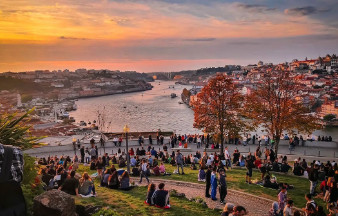
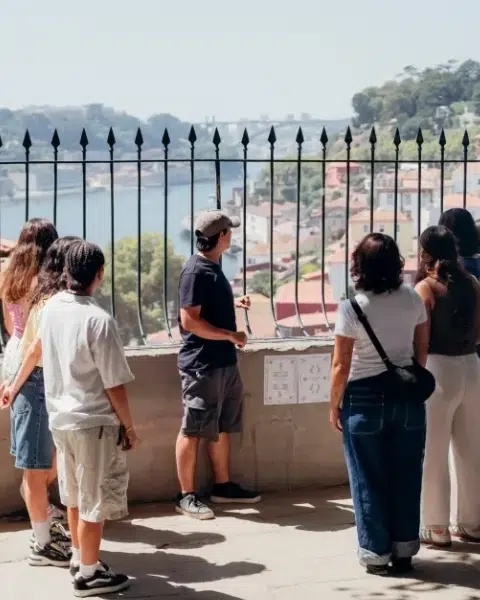
From the Clérigos area, the route gently descends toward the river, passing through Vitória viewpoint, where panoramic views open over the terracotta rooftops of the Ribeira district, the Douro River and the wine lodges of Vila Nova de Gaia.
Continuing downhill, the tour crosses Infante D. Henrique Square, where the neoclassical Palácio da Bolsa and the iron-built Ferreira Borges Market illustrate Porto’s mercantile prosperity during the height of Atlantic trade.
The walk then arrives at Ribeira district, the city’s historic riverside quarter. Here, time is allocated to explore Porto’s mercantile heart, observe traditional Rabelo boats and understand the economic significance of the Douro River in shaping the city’s identity.
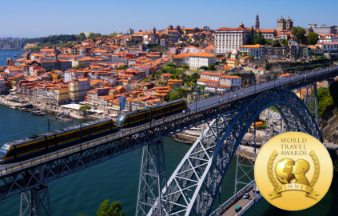
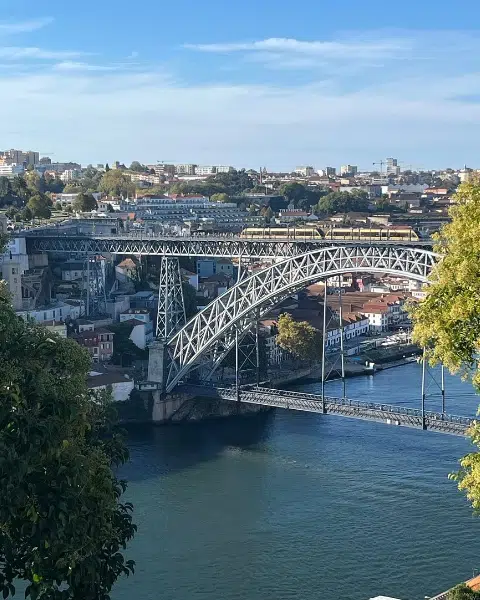
The final architectural highlight is the Dom Luís I Bridge, where interpretation explains 19th-century engineering innovation and the structural connection between Porto and Vila Nova de Gaia — home to the Port wine lodges that defined the city’s global commercial relevance.
The experience concludes having connected cathedral, commerce, Baroque ambition, liberal resistance and river trade into a coherent historical narrative. Throughout the route, architecture, economy, politics and geography are interpreted as interdependent layers, transforming the walk into a structured understanding of Porto rather than a simple sequence of landmarks.
When Is the Best Time to Do a Porto Walking Tour?
Morning (09:00–11:30)
- Mild temperatures
- Softer crowds
- Clear photographic light
Ideal for travellers who prefer structured context before exploring independently. Morning departures often avoid heavier pedestrian flow.
Late Afternoon (16:00–18:30)
- Warmer light over the river
- More atmospheric ambience
- Relaxed rhythm
In practice, the decisive factor is not the hour — it is the guide’s ability to adapt.
How Long Should a Porto Walking Tour Last?
The ideal duration is between 2.5 and 3.5 hours.
Shorter tours lack depth.
Longer tours risk cognitive fatigue.
A balanced pace ensures retention and engagement.
What Makes a Walking Tour High Quality?
A superior Porto walking tour typically offers:
- Small group size
- Structured narrative
- Local, experienced guide
- Logical route flow
- Balanced rhythm
- Historical accuracy
Cultural interpretation specialists emphasise that chronological structure significantly improves historical comprehension during guided experiences
The difference between a memorable experience and a superficial visit rarely lies in the monument itself — it lies in interpretation.
Among the established local operators, Bluedragon Porto City Tours has built a reputation for structured, small-group walking tours led by locally trained guides. Rather than focusing on isolated anecdotes, their historical routes follow a chronological framework — from medieval episcopal power around the Cathedral to the commercial expansion driven by the Port wine trade and the liberal resistance of the 19th century. This approach appeals particularly to travellers seeking depth, narrative coherence and contextual interpretation rather than a purely panoramic overview of the city.
Who Benefits Most from a Porto Walking Tour?
- First-time visitors
- Short-stay travellers
- Culture-oriented travellers
- Visitors planning wine cellar tours afterwards
- Anyone wanting to understand before wandering
A walking tour works as a strategic foundation for the rest of your stay.
Final Perspective
Porto can be admired casually. It can also be understood deeply.
A well-structured Porto walking tour transforms streets into narratives, elevations into social history and monuments into evidence of centuries of adaptation.
If the goal is to truly grasp the city’s character, starting on foot — guided, structured and contextualised — remains the most intelligent choice.
If you’re looking for a structured small-group experience, you can explore our detailed porto walking tour here.
FAQ – Porto Walking Tour: A Complete Historical and Practical Guide
In most standard Porto walking tours, monuments are interpreted from the exterior rather than visited internally. Entry tickets are typically not included in the base price.
This approach is intentional and helps maintain narrative coherence. Entering monuments often requires:
- Separate ticket purchases
- Waiting times and fixed entry slots
- Security procedures
- Interruptions to the chronological flow of the tour
By focusing on exterior interpretation, guides are able to explain architectural features, historical context and urban positioning without disrupting pacing. This ensures that the group remains aligned and that the broader historical framework remains clear.
Many experienced guides also emphasise that understanding a monument within its urban context — how it relates to surrounding streets, power structures and commercial zones — is often more valuable during a walking tour than a rushed interior visit.
Private tours or specialised thematic experiences may include selected monument entries, but this varies by operator and should be confirmed in advance.
In short, most Porto walking tours prioritise structured interpretation over interior access, allowing participants to revisit specific sites independently if they wish to explore them in greater depth.
Footwear is the most important consideration.
Porto’s historic centre is paved with granite cobblestones, which can be uneven and slippery, particularly after rain. Closed, comfortable shoes with good grip are strongly recommended. Sandals with smooth soles or high heels are not advisable on sloped streets.
Seasonal adjustments also matter:
- Summer: Lightweight clothing, sun protection and a water bottle are essential, as shade can be limited in open areas.
- Winter: Layered clothing and a windproof jacket are recommended, especially near the river where winds can be stronger.
A small backpack is generally more practical than a shoulder bag, as it distributes weight more evenly while walking uphill.
Yes — Porto is compact, and most major landmarks are within walking distance. However, the city is built on steep granite hills. Granite surfaces become particularly slippery after winter rain.
Expect:
- Noticeable elevation changes
- Sloping streets
- Uneven cobblestone pavements
- Occasional steps in the medieval core
Distances are short, but the terrain can be physically demanding. Comfortable shoes with good grip are essential, especially after rain.
Yes — but it depends on age.
Under 6: Full historical tours (2.5–3.5 hours) may be too long, especially given Porto’s steep streets and uneven pavements.
Ages 7–12: Generally suitable if the guide uses engaging storytelling and allows short pauses.
Teenagers: Well suited, particularly for structured historical narratives.
For families, smaller groups and morning tours usually offer the most comfortable pacing.
Yes — particularly during the high season (April to October).
Porto has experienced consistent growth in visitor numbers over the past decade, and small-group walking tours (typically 2–15 participants) frequently reach capacity, especially for English-language departures.
During peak summer months and long weekends:
- Booking at least 2–3 days in advance is advisable
- Morning tours tend to fill first
- Food & wine walking tours require earlier planning due to coordination with local venues
In the low season (November–March), availability is generally more flexible, although departure schedules may be reduced.
Travellers looking for an English-speaking guide in Porto should verify language availability when booking, particularly outside peak season when fewer daily departures may be scheduled.

Extremely proud to be amongst the top 10% of listings around the world on Tripadvisor for our Porto Tours